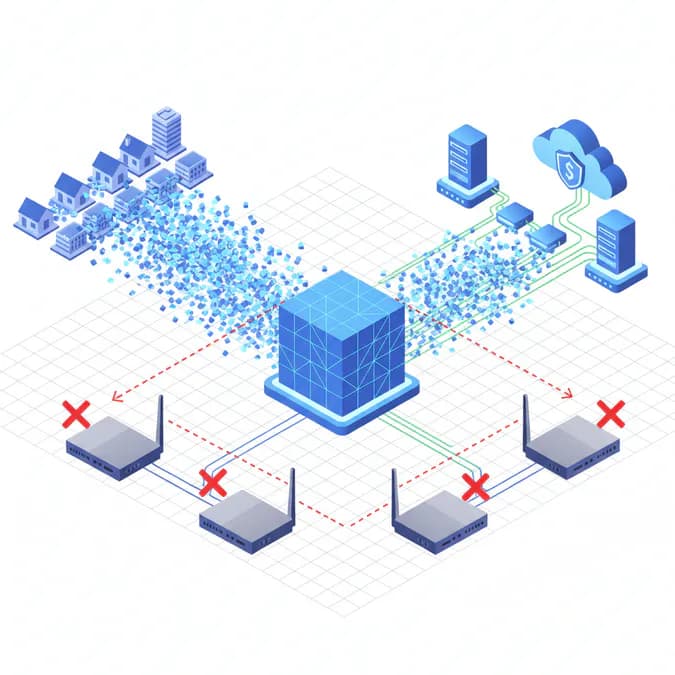
The Federal Communications Commission implemented a sweeping ban on foreign-produced consumer routers effective March 23, 2026, marking a significant escalation in US efforts to secure critical telecommunications infrastructure against cyber threats from adversarial nations. This policy predominantly targets Chinese manufacturers like TP-Link, which control over 65% of the US router market and serve as the default equipment for more than 300 Internet Service Providers across the country.
The ban reflects growing concerns about firmware vulnerabilities and potential exploitation by state-sponsored hackers, though cybersecurity experts note that evidence of deliberate backdoors remains unsubstantiated. This action represents part of a broader national security strategy that includes previous restrictions on foreign drones and designations of Chinese tech firms as security threats.
Understanding the FCC Router Ban
On March 23, 2026, the Federal Communications Commission officially prohibited the importation of all new foreign-made consumer routers into the United States. This comprehensive ban applies to 100% of new foreign-produced routers not specifically exempted through a Department of Defense and Homeland Security review process. The policy represents one of the most ag

The timing of this ban follows a pattern of escalating restrictions on foreign technology. In December 2025, the FCC implemented a similar ban on foreign-made drones for identical national security reasons. Just months earlier, in November 2025, the FCC added TP-Link and Huawei to its official National Security Threat List, effectively paving the way for the router import restrictions. [AppleInsider]
According to regulatory officials, the policy aims to push for secure supply chains with all routers produced domestically to mitigate national security risks. This approach prioritizes domestic manufacturing and supply chain control over market access and consumer choice.
The Cybersecurity Vulnerabilities Behind the Policy
The FCC's decision stems from longstanding concerns about hardware and firmware vulnerabilities in routers manufactured by Chinese firms. These devices, which serve as critical entry points to home and business networks, can potentially be exploited by state-sponsored hackers for espionage, botnet creation, or infrastructure disruption.
Cybersecurity analysts explain that routers typically come with firmware that may contain vulnerabilities requiring regular updates. The concern extends beyond unpatched software to fears of deliberate backdoors that could provide unauthorized access to network traffic and connected devices. However, independent experts emphasize that these fears of intentional backdoors remain unsubstantiated by concrete evidence. [AppleInsider]
The vulnerabilities in question could theoretically allow attackers to:
- Intercept network traffic and sensitive data
- Deploy malware across connected devices
- Create botnets for distributed denial-of-service attacks
- Establish persistent access to home or business networks
- Monitor communications and conduct espionage
These risks take on heightened significance given the critical role routers play in network infrastructure. As the gateway between users and the internet, compromised routers could affect millions of Americans simultaneously if exploited at scale by sophisticated threat actors.
Market Impact: TP-Link and Chinese Manufacturers
The ban's most immediate impact falls on TP-Link, the dominant Chinese router manufacturer in the US market. TP-Link commands over 65% of the US router market share, a dominance achieved during the pandemic when demand for networking equipment surged. The company serves as the default router provider for more than 300 US Internet Service Providers, making it deeply embedded in American broadband infrastructure. [AppleInsider]
This market concentration means the ban will create significant supply chain disruptions. ISPs that have relied on TP-Link equipment will need to identify alternative suppliers, potentially at higher costs and with different technical specifications. The transition could affect service quality, installation procedures, and customer support operations across the industry.
Other Chinese router manufacturers also face restrictions under the ban, though TP-Link's market dominance makes it the most visible target. The company's position as a national security threat, formally designated in November 2025, reflects broader US-China tech tensions and the Biden-era and continuing Trump administration policies prioritizing national security over market access. [Reuters]
Netgear, the major US-based router manufacturer, has actively lobbied against Chinese router dominance through lawsuits and advocacy efforts. The company's efforts contributed to the regulatory pressure that culminated in the March 2026 ban, potentially positioning Netgear to capture market share previously held by Chinese competitors.
Exemption Process and Department of Defense Review
While the ban is comprehensive, it includes a pathway for exemptions through a rigorous review process. Foreign-made routers can potentially enter the US market if they receive approval from both the Department of Defense and the Department of Homeland Security. This exemption process ensures that national security concerns are thoroughly evaluated before any exceptions are granted.
The exemption requirement effectively gives the federal government control over which foreign routers can be imported, allowing for case-by-case evaluation of specific products and manufacturers. This approach provides flexibility while maintaining strict security standards. However, the review process is expected to be lengthy and demanding, with no guarantee of approval even for established manufacturers.
Companies seeking exemptions must demonstrate that their products do not pose national security risks and meet stringent security standards. This could include:
- Independent security audits and penetration testing
- Source code review and verification
- Supply chain transparency documentation
- Commitment to regular security updates
- Compliance with US cybersecurity standards
The exemption process reflects a broader strategy of using regulatory authority to shape technology supply chains in ways that align with national security objectives.
Industry Response and Domestic Alternatives
The router ban has prompted significant industry reaction, with ISPs, manufacturers, and technology companies reassessing their supply chains and product strategies. Internet Service Providers face immediate pressure to identify alternative equipment suppliers and manage the transition away from TP-Link and other Chinese manufacturers.
Domestic manufacturers like Netgear are positioned to benefit from the ban, though they will need to scale production to meet demand previously served by Chinese competitors. The transition to domestic manufacturing could increase costs for ISPs and potentially consumers, as US-based production typically involves higher labor and operational expenses.
Some industry observers have raised concerns about the practical implications of the ban. The router market has consolidated around Chinese manufacturers due to cost efficiency and manufacturing scale. Rapidly shifting to domestic production could create supply shortages, price increases, and potential quality issues during the transition period.
Alternative approaches to addressing security concerns have been proposed by some experts, including:
- Mandatory security certification programs for all routers
- Regular firmware update requirements and security patch management
- Enhanced monitoring and threat detection systems
- International cooperation on router security standards
- Consumer education about router security best practices
However, the FCC has chosen the more restrictive approach of import bans rather than these alternative regulatory frameworks.
Long-Term Implications for Network Security
The router ban represents a significant shift in how the US government approaches technology supply chain security. Rather than relying solely on cybersecurity measures and threat detection, the policy uses trade restrictions to control access to critical infrastructure components.
This approach has several long-term implications:
Supply Chain Nationalism
The ban reflects a broader trend toward prioritizing domestic manufacturing and supply chain control, even at the cost of market efficiency and consumer choice. This represents a fundamental shift in technology policy away from globalized supply chains toward more localized production.
Precedent for Future Restrictions
The success of the router ban may encourage similar restrictions on other foreign-manufactured technology, from semiconductors to cloud infrastructure. The policy establishes a template for using import bans as a national security tool in the technology sector.
Increased Costs
Domestic manufacturing typically costs more than overseas production, potentially leading to higher prices for ISPs and consumers. This cost increase could be passed along through higher broadband service fees and equipment charges.
Innovation Considerations
Restricting market competition could reduce incentives for innovation and security improvements in the router market. A less competitive landscape may slow the pace of technological advancement and security enhancements.
International Relations
The ban reflects and reinforces US-China tech tensions, potentially prompting retaliatory measures from Beijing. This could escalate technology trade conflicts and create additional barriers to international commerce.
Cybersecurity Focus
The policy emphasizes hardware and supply chain security over software security measures and threat detection capabilities. This approach may not address vulnerabilities in existing equipment already deployed across US networks.
The ban also raises questions about the effectiveness of import restrictions as a cybersecurity strategy. While controlling supply chains can reduce certain risks, it does not address vulnerabilities in existing equipment already deployed across US networks. Millions of TP-Link and other Chinese-made routers will continue operating in American homes and businesses, potentially requiring separate security measures and monitoring.
Future network security strategy will likely need to balance supply chain control with practical security measures for existing infrastructure. This could include enhanced monitoring systems, mandatory security updates, and threat detection capabilities designed to identify and mitigate exploitation attempts regardless of router origin.
The FCC's router ban marks a watershed moment in how the US government approaches technology security. By prioritizing supply chain control over market access, the policy signals a fundamental shift toward treating critical infrastructure components as national security assets requiring government oversight and domestic production. While this approach addresses legitimate security concerns, it also introduces new challenges around costs, innovation, and the practical security of existing infrastructure that will require ongoing attention and refinement.
Key Takeaways
1. The FCC router ban effective March 23, 2026, targets foreign-made routers, primarily impacting TP-Link and other Chinese manufacturers.
2. The ban aims to enhance cybersecurity by eliminating potential vulnerabilities associated with foreign hardware.
3. ISPs will face supply chain disruptions and must seek alternative suppliers, potentially increasing costs.
4. The exemption process allows some foreign routers to enter the market if they meet stringent security standards.
5. The ban reflects a broader trend toward prioritizing national security in technology supply chains.
FAQ
What is the FCC router ban?
The FCC router ban is a regulation that prohibits the importation of foreign-made consumer routers into the United States, effective March 23, 2026.
Why was the ban implemented?
The ban was implemented to address cybersecurity concerns and vulnerabilities associated with foreign-manufactured routers, particularly those from Chinese companies.
How will this affect consumers?
Consumers may experience changes in available router options, potential price increases, and shifts in service quality as ISPs transition to alternative suppliers.
What is the exemption process?
The exemption process allows certain foreign routers to be imported if they pass a review by the Department of Defense and Homeland Security, ensuring they do not pose national security risks.
What are the long-term implications of the ban?
The ban may lead to increased costs, reduced competition, and a shift toward domestic manufacturing in the technology sector.