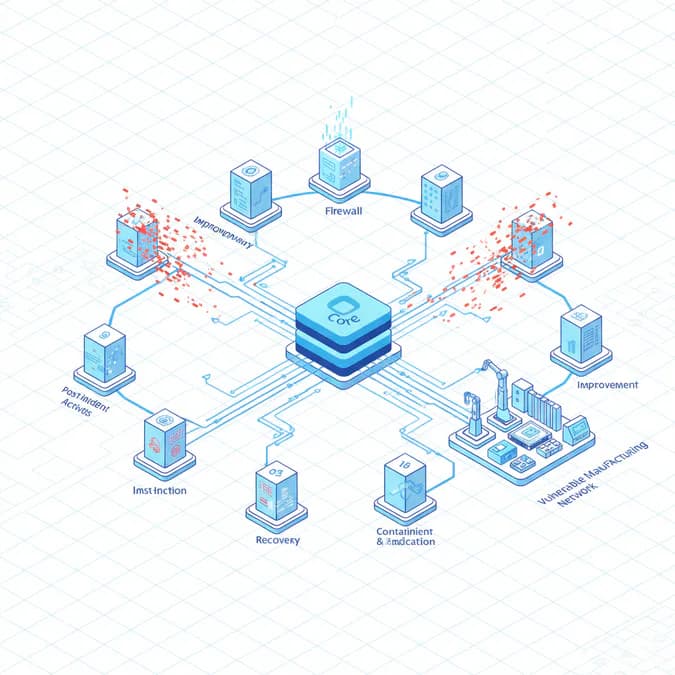
The National Institute of Standards and Technology (NIST) has recently released the initial public draft of NIST Special Publication (SP) 1800-41, titled "Responding to and Recovering from a Cyber Attack: Cybersecurity for the Manufacturing Sector." This publication provides essential guidance for manufacturing organizations to effectively respond to and recover from cyber incidents, ensuring minimal disruption to operations. This article delves into the purpose, scope, and key recommendations of NIST SP 1800-41, offering insights into how organizations can leverage this resource to bolster their cybersecurity posture and enhance their cyber attack response.
Introduction to NIST SP 1800-41
NIST SP 1800-41 is the latest addition to the National Cybersecurity Center of Excellence’s (NCCoE) practice guide series, designed to translate cybersecurity guidance into actionable, real-world recommendations. This initial public draft focuses specifically on helping manufacturing organizations enhance their ability to respond to and recover from cyber attacks. The
 f="https://www.nist.gov/" target="_blank" rel="noopener">NIST publication addresses the critical need for robust cybersecurity measures in the manufacturing sector, where cyber incidents can have far-reaching consequences, impacting production, safety, and supply chains. The release of NIST SP 1800-41 underscores the growing emphasis on cyber resilience, particularly in manufacturing environments where the convergence of IT and operational technology (OT) presents unique challenges.
Purpose and Scope for Manufacturing Sector
The primary purpose of NIST SP 1800-41 is to provide manufacturing organizations with a practical framework for responding to and recovering from cyber attacks targeting their industrial control systems (ICS) and operational technology (OT). This is particularly important because these systems are often critical to the manufacturing process, and their compromise can lead to significant disruptions. According to NIST, the publication offers actionable guidelines tailored to manufacturing environments. The scope of the publication includes:
- Incident Response Planning: Developing and implementing comprehensive incident response plans.
- Detection and Analysis: Identifying and analyzing cyber incidents affecting manufacturing systems.
- Containment and Eradication: Containing the spread of an attack and eradicating malicious elements from the network.
- Recovery and Restoration: Restoring systems and data to their pre-incident state and ensuring operational resilience.
NIST worked with 11 industry collaborators on the draft, ensuring its relevance and practicality for the manufacturing sector. The guide focuses on response, recovery, restoration, and operational resilience, addressing the unique challenges faced by manufacturing organizations.
Key Guidance on Incident Response
NIST SP 1800-41 provides detailed guidance on establishing a robust incident response capability. This includes:
- Developing an Incident Response Plan: Creating a documented plan that outlines roles, responsibilities, and procedures for responding to different types of cyber incidents.
- Establishing a Security Operations Center (SOC): Implementing a centralized function for monitoring, detecting, and responding to security events.
- Implementing Threat Intelligence: Leveraging threat intelligence feeds to proactively identify and mitigate potential threats.
- Conducting Regular Training and Exercises: Ensuring that incident response teams are well-trained and prepared to handle cyber incidents effectively.
The guide builds upon NIST Special Publication 800-61 Rev. 2, Computer Security Incident Handling Guide, providing a manufacturing-specific lens to the broader incident-response framework. The NIST NCCoE project page states that "The project provides an approach for responding to and recovering from an ICS attack within the manufacturing sector."
Recovery Procedures and Best Practices
Effective recovery procedures are crucial for minimizing downtime and ensuring business continuity following a cyber attack. NIST SP 1800-41 emphasizes the following best practices:
- Data Backup and Recovery: Implementing regular data backups and testing recovery procedures to ensure data can be restored quickly and reliably.
- System Hardening: Strengthening the security posture of systems by applying security patches, configuring firewalls, and implementing access controls.
- Incident Documentation: Maintaining detailed records of all incident-related activities to facilitate post-incident analysis and improve future response efforts.
- Communication and Coordination: Establishing clear communication channels and coordinating with internal and external stakeholders throughout the recovery process.
According to Sophos’ State of Ransomware 2025 report, the average ransomware recovery cost for manufacturing organizations is $1.47 million, underscoring the importance of robust recovery planning in this sector.
How Organizations Can Access and Implement
NIST SP 1800-41 is available for free download from the NIST website. Manufacturing organizations can implement the guidance by:
- Reviewing the Publication: Familiarizing themselves with the recommendations and best practices outlined in the document.
- Conducting a Gap Analysis: Assessing their current cybersecurity capabilities and identifying areas for improvement.
- Developing an Implementation Plan: Creating a detailed plan for implementing the recommendations, prioritizing actions based on risk and business impact.
- Providing Feedback: Participating in the public comment period to provide feedback and contribute to the refinement of the publication.
Industry Impact and Adoption
The release of NIST SP 1800-41 is expected to have a significant impact on the manufacturing sector by providing a standardized framework for cybersecurity incident response and recovery. By adopting the recommendations outlined in the publication, manufacturing organizations can:
- Reduce the Risk of Cyber Attacks: Strengthening their security posture and mitigating potential vulnerabilities.
- Minimize Downtime: Responding to and recovering from cyber incidents more quickly and effectively.
- Improve Compliance: Meeting regulatory requirements and industry standards for cybersecurity.
- Enhance Business Resilience: Ensuring business continuity and minimizing the financial and operational impact of cyber incidents.
The guidance is particularly relevant given the increasing sophistication and frequency of cyber attacks targeting manufacturing organizations. IBM Security's Cost of a Data Breach Report 2024 indicates that the average cost of a data breach is $4.88 million, highlighting the financial implications of inadequate incident response and recovery planning. The report also notes that the median time to identify a breach is 187 days, emphasizing the operational challenges of detecting attacks quickly enough to limit damage.
Public Feedback and Comment Period
As an initial public draft, NIST SP 1800-41 is open for public review and feedback. The comment period is open through July 8, 2026. NIST encourages stakeholders to provide comments and suggestions to improve the clarity, accuracy, and practicality of the publication. Feedback can be submitted through the NIST website or by contacting the NCCoE directly. This collaborative approach ensures that the final version of NIST SP 1800-41 reflects the needs and perspectives of the manufacturing community.
Related NIST Cybersecurity Publications
NIST offers a range of cybersecurity publications and resources to help organizations improve their security posture. Some related publications include:
- NIST Special Publication 800-61 Rev. 2: Computer Security Incident Handling Guide
- NIST Cybersecurity Framework
- NIST Risk Management Framework
These resources provide comprehensive guidance on various aspects of cybersecurity, including risk management, incident response, and security controls.
NIST SP 1800-41 represents a significant step forward in enhancing cybersecurity for the manufacturing sector. By providing practical guidance on responding to and recovering from cyber attacks, this publication empowers organizations to minimize downtime, protect critical assets, and ensure business resilience. Manufacturing organizations are encouraged to review the publication, implement its recommendations, and participate in the public comment period to help shape the final version.
Key Takeaways
- Understanding the importance of a structured cyber attack response is crucial for manufacturing organizations.
- NIST SP 1800-41 provides a comprehensive framework for incident response and recovery.
- Implementing best practices can significantly reduce the impact of cyber incidents.
- Organizations are encouraged to actively participate in the feedback process to enhance the publication.
FAQ
What is NIST SP 1800-41?
NIST SP 1800-41 is a publication that provides guidance for manufacturing organizations on how to respond to and recover from cyber attacks.
Why is cyber attack response important?
A robust cyber attack response is essential to minimize disruption, protect assets, and ensure business continuity in manufacturing environments.
How can organizations implement the guidance from NIST SP 1800-41?
Organizations can implement the guidance by reviewing the publication, conducting a gap analysis, and developing an implementation plan.