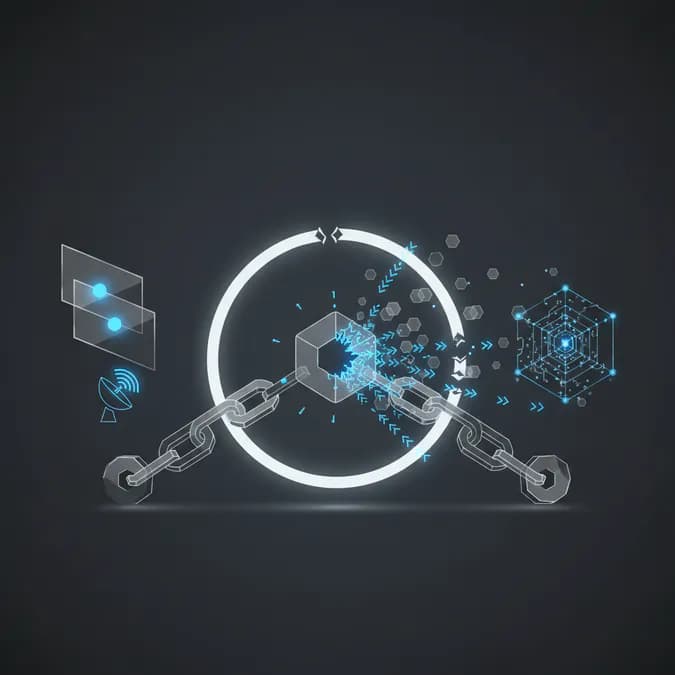
Understanding Supply Chain Cyberattacks
Supply chain cyberattacks (SCCAs) target the trusted relationships between organizations and their vendors, software providers, contractors, and managed service providers. According to the Canadian Centre for Cyber Security, "supply chain compromises are indirect." Rather than attempting to penetrate a target's well-defended network perimeter, a

The fundamental vulnerability lies in trust. Organizations grant their suppliers, vendors, and third-party service providers access to critical systems and data. This trust is necessary for business operations, but it also creates an expanded attack surface. When a supplier is compromised, attackers inherit the legitimate access and trust relationships that supplier enjoys with downstream customers. This allows threat actors to "entirely circumvent those organizations' cyber network perimeter," as the Canadian Centre for Cyber Security notes.
The software supply chain presents particularly acute risks. Malicious code can be inserted into an update, package, or build pipeline and then propagated to many customers simultaneously. A single compromised vendor can affect thousands of organizations in a matter of hours or days, creating a cascading impact across entire sectors. This is fundamentally different from traditional cyberattacks, which typically target individual organizations.
Why Traditional Defenses Fall Short
Perimeter-based security models assume that threats originate from outside the organization's network boundaries. Firewalls, intrusion detection systems, and endpoint protection are designed to block external threats. However, supply chain attacks bypass these defenses entirely because the malicious code or access comes from a trusted internal source—the vendor's legitimate software update or service.
When an organization receives an update from a trusted vendor, security teams typically allow it to pass through without the same scrutiny applied to external threats. The update comes through established, whitelisted communication channels. It may be digitally signed by the vendor, creating an additional layer of false legitimacy. By the time the organization realizes the update contains malicious code, it has already been deployed across the network.
How Attacks Propagate Through Trusted Relationships
The PLOS One multi-case study analyzed seven documented supply chain cyberattacks to identify common propagation mechanisms. The research found that attackers exploit the trust relationships embedded in software distribution, vendor management, and outsourced IT services.
One of the most well-known examples is the SolarWinds incident, which demonstrated how a single compromised vendor could affect thousands of downstream customers. By inserting malicious code into legitimate software updates, attackers were able to distribute their payload to organizations across government, finance, healthcare, and technology sectors. The attack bypassed traditional perimeter defenses because the malicious code arrived through a trusted update channel.
The Attack Propagation Model
The propagation mechanism works through a predictable sequence of steps:
- Supplier Identification: An attacker identifies a vulnerable supplier or vendor with access to downstream customers. The attacker researches the vendor's security posture, looking for weaknesses in authentication, network segmentation, or security monitoring.
- Initial Compromise: The attacker compromises the vendor's systems, often through credential theft, phishing, or exploitation of unpatched vulnerabilities. The goal is to gain a foothold inside the vendor's network.
- Lateral Movement: Once inside the vendor's environment, the attacker moves laterally through the network, escalating privileges and identifying critical systems such as development environments, build servers, or distribution platforms.
- Pipeline Injection: The attacker gains access to the vendor's development, build, or distribution pipeline. This might involve compromising a build server, gaining access to source code repositories, or intercepting the software packaging process.
- Malicious Code Insertion: The attacker injects malicious code or maintains persistent access through a backdoor. The malicious code is designed to be stealthy, avoiding detection by the vendor's security tools.
- Distribution: When the vendor releases updates or services to downstream customers, the malicious code or backdoor is distributed automatically. Thousands of organizations may receive the compromised update within hours.
- Downstream Compromise: Downstream customers install the update believing it comes from a trusted source, unknowingly compromising their own networks. The attacker now has access to multiple victim organizations.
This propagation model is particularly effective because it leverages legitimate trust relationships and established communication channels. Security teams at downstream organizations may not scrutinize updates from trusted vendors as carefully as they would scrutinize external threats. The attack essentially uses the vendor's reputation as a Trojan horse.
The Role of Credential Theft and Identity Abuse
Recent threat intelligence reveals that credential theft and identity abuse have become major enablers of supply chain intrusions. According to threat research cited by Lumu, 1.8 billion credentials were reportedly exfiltrated globally in the first half of 2025. This represents an 800% increase in compromised credentials over the previous six months, underscoring the scale of identity abuse relevant to supply chain attacks.
Stolen credentials provide attackers with a direct pathway into vendor environments. Rather than exploiting zero-day vulnerabilities or conducting sophisticated social engineering campaigns, attackers can simply purchase or obtain stolen credentials on the dark web and use them to authenticate as legitimate users. This approach is faster, cheaper, and more reliable than developing exploits.
The Credential Economy
The dark web hosts thriving marketplaces where stolen credentials are bought and sold. A single compromised account might cost anywhere from a few dollars to hundreds of dollars, depending on the account's privileges and the organization's value. For attackers targeting supply chain vendors, credentials belonging to system administrators, developers, or DevOps engineers are particularly valuable because these accounts have broad access to critical systems.
Once inside a vendor's network using stolen credentials, attackers can move laterally, escalate privileges, and establish persistent access. They can then leverage the vendor's trusted relationships to reach downstream customers. The scale of credential exfiltration means that many vendors likely have compromised credentials in circulation, creating a persistent risk of unauthorized access.
Identity Abuse and Account Takeover
Beyond simple credential theft, attackers increasingly use identity abuse techniques to compromise vendor accounts. This might involve:
- Credential stuffing attacks that test stolen credentials against vendor systems
- Phishing campaigns targeting vendor employees to capture credentials or session tokens
- Social engineering attacks that trick employees into revealing credentials or granting access
- Exploitation of weak password policies or lack of multi-factor authentication
- Compromise of password managers or credential storage systems
The 800% increase in compromised credentials over six months suggests that attackers are becoming increasingly successful at obtaining valid credentials. This creates a persistent threat to vendors and their downstream customers.
Measuring the Impact of Supply Chain Breaches
The impact of supply chain cyberattacks extends far beyond the initial compromised vendor. When a single trusted vendor distributes malicious updates or maintains backdoor access, thousands of organizations can be affected simultaneously. This creates a systemic risk that traditional incident response and recovery procedures are not designed to handle.
Scale of Impact
Consider the scale: A software vendor with a large customer base might distribute updates to 10,000 or more organizations. If that vendor is compromised and distributes malicious code, all 10,000 customers could be affected within hours. Each of those organizations must then:
- Detect the compromise through security monitoring or external notification
- Investigate the scope of the breach and identify affected systems
- Contain the threat by isolating compromised systems and revoking compromised credentials
- Eradicate the malicious code or backdoor from all affected systems
- Recover systems and restore normal operations
- Conduct forensic analysis to understand the attack and prevent recurrence
The collective cost in terms of downtime, remediation, and lost productivity can reach billions of dollars. Organizations in regulated industries such as healthcare, finance, or critical infrastructure face additional costs related to regulatory notification, compliance investigations, and potential fines.
National Security and Critical Infrastructure Implications
Beyond financial impact, supply chain attacks can have national security implications. When critical infrastructure providers, government agencies, or defense contractors are affected, the consequences extend to public safety and national security. The SolarWinds attack, for example, affected U.S. government agencies and critical infrastructure operators, prompting a coordinated federal response.
Supply chain attacks targeting critical infrastructure could disrupt power grids, water systems, transportation networks, or healthcare systems. The cascading nature of these attacks means that a single compromised vendor could affect multiple critical infrastructure sectors simultaneously.
The Weakest Link Problem
The Canadian Centre for Cyber Security emphasizes that "a supply chain's cyber security is only as strong as the weakest link." This means that even organizations with mature security programs and substantial security budgets can be compromised through a vulnerable supplier. This creates a collective action problem: organizations cannot fully protect themselves without ensuring that all their suppliers also maintain strong security practices.
Governance Strategies and Mitigation Approaches
The PLOS One research and related government guidance increasingly frame supply chain security as a governance problem requiring organizational, contractual, and technical controls working in concert.
Supplier Vetting and Risk Assessment
Organizations must establish formal processes for assessing the cybersecurity posture of suppliers before granting them access to critical systems or data. This includes:
- Evaluating the supplier's security practices, certifications, and compliance with industry standards
- Assessing the supplier's incident response capabilities and history
- Reviewing the supplier's financial stability and business continuity planning
- Conducting security assessments or penetration testing of the supplier's systems
- Verifying that the supplier maintains appropriate insurance coverage
Contracts should include specific security requirements and audit rights that allow organizations to verify compliance. Organizations should also establish ongoing monitoring of supplier security posture rather than relying on one-time assessments.
Secure Software Development Practices
Software vendors must implement secure development practices throughout the build pipeline. This includes:
- Code review processes that examine all code changes before deployment
- Static and dynamic analysis tools that identify vulnerabilities in code
- Secure build environments that prevent unauthorized modification of software
- Cryptographic signing of software packages to ensure integrity and authenticity
- Software Bill of Materials (SBOMs) that document all components and dependencies
The U.S. government, through CISA and NIST, increasingly emphasizes the use of SBOMs that document all components and dependencies in software products. SBOMs enable organizations to quickly identify whether their systems contain vulnerable or compromised components.
Least-Privilege Access
Organizations should implement least-privilege access principles for all third-party vendors and contractors. This means:
- Vendors receive only the minimum access necessary to perform their functions
- Access is time-limited and expires automatically after a specified period
- Access is monitored and logged for audit purposes
- Access is regularly reviewed and revoked when no longer needed
- Network segmentation limits the lateral movement available to an attacker who compromises a vendor account
Least-privilege access reduces the impact of a vendor account compromise by limiting the attacker's ability to move laterally through the network or access sensitive systems.
Incident Notification Requirements
Contracts with suppliers should include specific incident notification requirements. Suppliers must notify customers immediately upon discovering a security incident that could affect downstream customers. This enables rapid detection and response. Notification requirements should specify:
- The timeframe for notification (e.g., within 24 hours of discovery)
- The information that must be included in the notification (e.g., scope of compromise, affected systems, recommended actions)
- The communication channels and escalation procedures
- The supplier's obligation to provide ongoing updates as the investigation progresses
Continuous Monitoring
Organizations should implement continuous monitoring of vendor access and activities. This includes:
- Logging all vendor access to critical systems and data
- Analyzing logs for suspicious behavior that might indicate compromise
- Conducting regular security assessments of vendor systems
- Using behavioral analytics to identify when vendor accounts are being used in unusual ways
- Implementing alerts for suspicious activities such as unusual data access or privilege escalation
Government Guidance and Standards
CISA and NIST continue pushing for stronger supply chain controls. Federal guidance increasingly emphasizes SBOMs, secure development, supplier assurance, and continuous monitoring. Organizations working with government agencies or in regulated industries must comply with these standards. However, best practices in supply chain security are increasingly relevant to all organizations, regardless of sector.
Key Takeaways
Supply chain cyberattacks represent a fundamental shift in how organizations must think about cybersecurity. Traditional perimeter-based defenses are insufficient because attackers can bypass them entirely by compromising trusted third parties. The scale of potential impact—thousands of organizations affected by a single compromised vendor—creates systemic risk that requires coordinated governance approaches.
The proliferation of stolen credentials, with 1.8 billion credentials exfiltrated in the first half of 2025 alone, means that vendor compromise is an ongoing threat. Organizations cannot assume that their suppliers are secure; they must actively assess, monitor, and verify supplier security practices.
Effective supply chain security requires a combination of governance, contractual, and technical controls. Organizations must vet suppliers, require secure development practices, implement least-privilege access, establish incident notification protocols, and conduct continuous monitoring. Government agencies and standards bodies like CISA and NIST are providing increasingly detailed guidance on these practices.
Ultimately, supply chain security is a collective responsibility. As the Canadian Centre for Cyber Security notes, a supply chain is only as strong as its weakest link. Organizations must work with their suppliers to strengthen the entire ecosystem, not just their own defenses. The research from PLOS One's multi-case study provides valuable insights into how these attacks propagate and what governance approaches can reduce systemic risk across interconnected organizations.