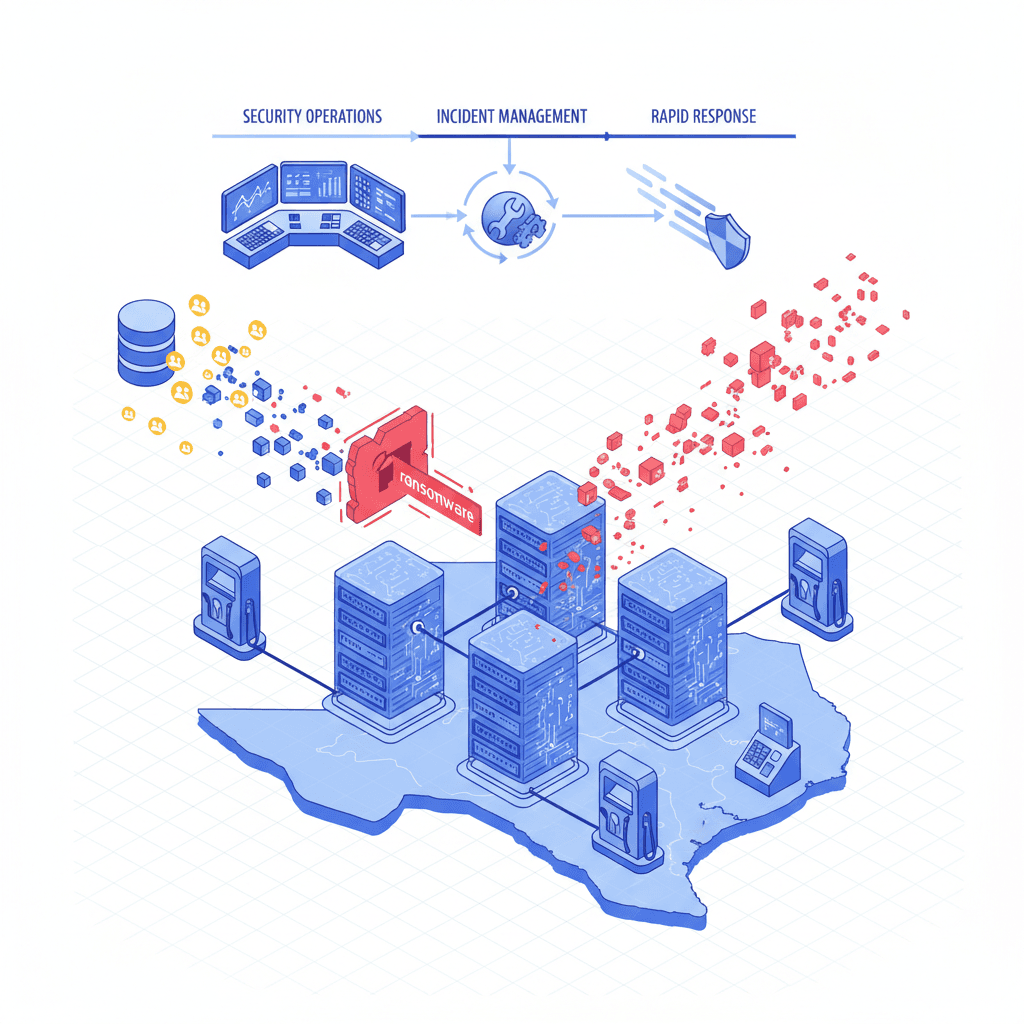
A ransomware attack on a company managing dozens of gas stations across Texas has exposed sensitive customer information, including Social Security numbers, in the latest example of how cybercriminals are increasingly targeting retail and energy sector businesses.
The incident underscores the vulnerability of companies that handle large volumes of customer data, particularly in industries where cybersecurity investments may lag behind the sophistication of modern threats. Gas station chains, which often process payment information and maintain customer loyalty programs, have become attractive targets for ransomware operators seeking valuable personal data.
Understanding the Attack Vector
Ransomware attacks typically begin when cybercriminals gain unauthorized access to a company's network through various means, including phishing emails, exploiting unpatched software vulnerabilities, or compromising weak credentials. Once inside, attackers deploy malicious software that encrypts critical files and systems, demanding payment for their release.
In many cases, modern ransomware groups employ a double-extortion tactic: they not only encrypt data but also exfiltrate sensitive information before encryption. This allows them to threaten public release of the stolen data if their ransom demands are not met, creating additional pressure on victims.
The Scope of Data Exposure
The exposure of Social Security numbers represents a particularly serious breach, as this information can be used for identity theft, fraudulent credit applications, and various forms of financial fraud. Unlike credit card numbers, which can be cancelled and replaced, Social Security numbers are permanent identifiers that cannot be changed easily.
Customers whose information was compromised may face long-term risks, including unauthorized account openings, tax fraud, and damage to their credit profiles. The full extent of the data breach, including the number of affected individuals, remains a critical concern for both the company and regulatory authorities.
Implications for the Retail Energy Sector
This incident highlights the cybersecurity challenges facing the retail energy sector, where companies must balance operational efficiency with robust security measures. Gas station chains often operate on thin profit margins, which can lead to underinvestment in cybersecurity infrastructure and personnel.
The attack also demonstrates how supply chain vulnerabilities can create cascading security risks. When a single company manages operations for multiple locations, a successful breach can impact numerous facilities simultaneously, amplifying the potential damage.
Protective Measures and Response
Organizations in similar industries should prioritize several key security measures: implementing multi-factor authentication, maintaining regular data backups stored offline, conducting employee security awareness training, and ensuring all systems are promptly patched against known vulnerabilities.
For affected customers, immediate steps should include monitoring credit reports, placing fraud alerts with credit bureaus, and considering credit freezes to prevent unauthorized account openings. Organizations should also provide clear communication about the breach and offer identity protection services to impacted individuals.
The incident serves as a stark reminder that cybersecurity is not merely an IT concern but a fundamental business risk that requires ongoing investment, vigilance, and a comprehensive security strategy across all organizational levels.