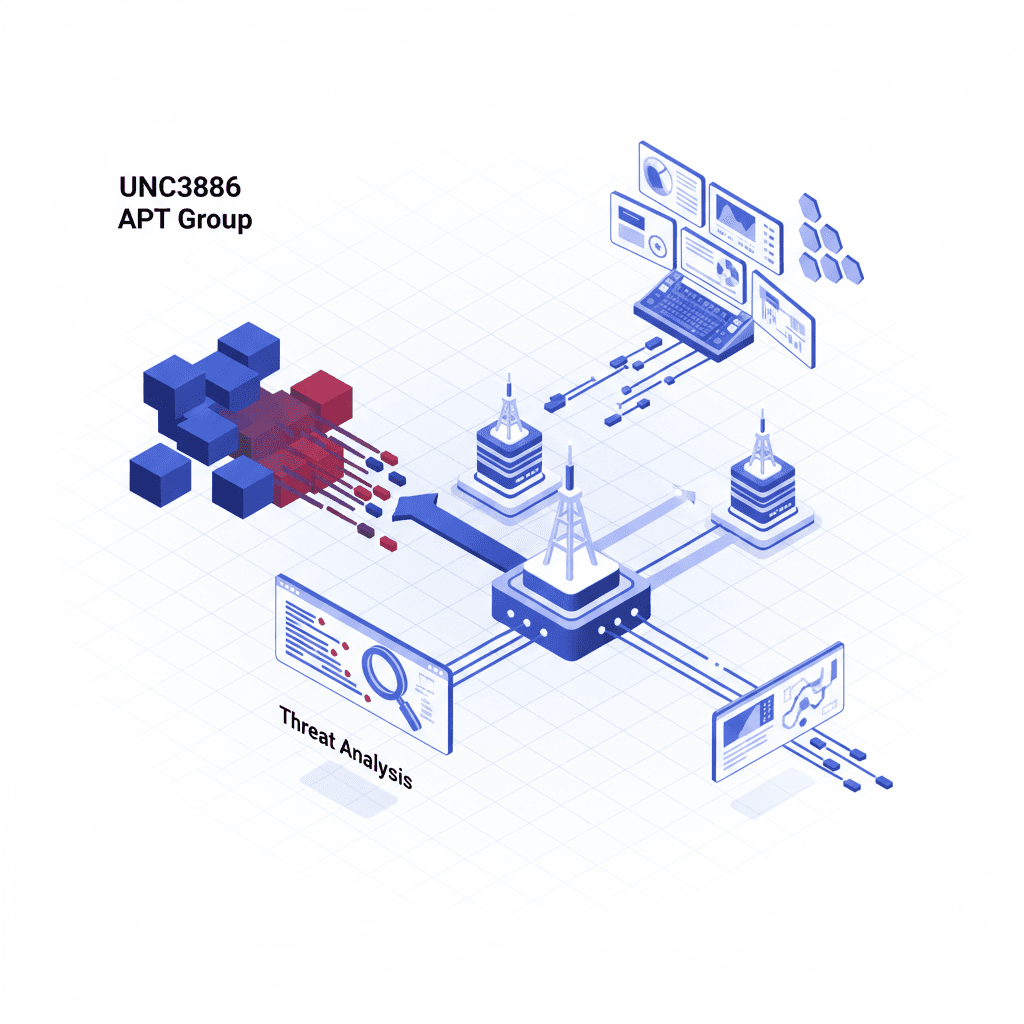
Singapore's government has publicly attributed a sophisticated cyber-espionage campaign to UNC3886, a Chinese state-sponsored advanced persistent threat (APT) group known for targeting critical infrastructure. The months-long attack successfully infiltrated the networks of Singapore's four largest telecommunications providers, though authorities maintain that no customer data was compromised.
Significance of the Breach
The disclosure marks a significant cybersecurity incident for the Southeast Asian nation, which positions itself as a regional technology and financial hub. While Singapore officials have not named the affected telecom operators, the country's telecommunications sector is dominated by Singtel, StarHub, M1, and TPG Telecom.
Understanding UNC3886
UNC3886 is a sophisticated threat actor that has been tracked by cybersecurity researchers for its advanced capabilities and focus on espionage operations. The group is known for exploiting zero-day vulnerabilities and deploying custom malware designed to evade detection by traditional security tools. Their operations typically target telecommunications, technology, and government sectors across Asia and beyond.
Government Response and Investigation
According to Singapore's Cyber Security Agency, the intrusion was detected and contained through coordinated efforts between government agencies and the affected telecommunications companies. The investigation revealed that while the attackers gained unauthorized access to network infrastructure, there was no evidence of data exfiltration or compromise of customer information.
Why Telecommunications Networks Are Targeted
This incident highlights the ongoing threat that state-sponsored actors pose to critical infrastructure, particularly telecommunications networks. Telecom providers are attractive targets for espionage operations because they handle vast amounts of sensitive communications data and provide essential connectivity services that underpin modern economies.
Attack Methodology
The attack methodology employed by UNC3886 typically involves multiple stages, beginning with initial compromise through vulnerable edge devices or supply chain vectors. Once inside a network, the group establishes persistence through sophisticated backdoors and moves laterally to access high-value systems while maintaining stealth.
Transparency and Attribution
Singapore's transparent disclosure of this incident reflects the government's commitment to cybersecurity awareness and information sharing. By publicly attributing the attack to a specific threat actor, authorities aim to raise awareness about the tactics, techniques, and procedures used by advanced persistent threats.
Global Implications
The telecommunications sector globally has become increasingly targeted by nation-state actors seeking intelligence gathering capabilities. Recent years have seen similar campaigns against telecom infrastructure in multiple countries, underscoring the need for enhanced security measures and continuous monitoring.
Defense Recommendations
Experts recommend that organizations in critical infrastructure sectors implement zero-trust architectures, conduct regular security assessments, and maintain robust incident response capabilities. Network segmentation, multi-factor authentication, and advanced threat detection systems are essential components of defense against sophisticated adversaries like UNC3886.
As geopolitical tensions continue to influence cyberspace operations, incidents like this serve as reminders that even well-defended networks remain vulnerable to determined state-sponsored actors. The cybersecurity community continues to monitor UNC3886's activities and share threat intelligence to help organizations defend against this persistent threat.