Table of Contents

- CBSE Portal Security Concerns Prompt Government Investigation
- What Triggered the Investigation
- The IIT Audit: What's Being Examined
- Security Implications for Educational Systems
- Scoring Discrepancies: A Technical or Security Issue?
- Hack Claims and Threat Landscape
- Implications for Students and Institutions
- Government Response and Remediation
- Broader Lessons for Digital Education Infrastructure
- Key Takeaways
CBSE Portal Security Concerns Prompt Government Investigation
The Central Board of Secondary Education (CBSE) exam portal has come under significant scrutiny following reports of technical glitches, scoring discrepancies, and security concerns. The situation has prompted a comprehensive government-ordered audit by the Indian Institute of Technology (IIT) to investigate the integrity and security of the digital exam evaluation system. CBSE portal security has become a cri

The CBSE, which oversees examinations for millions of students across India, relies on digital infrastructure for exam administration and evaluation. Recent incidents have raised serious questions about the robustness of these systems and their ability to protect sensitive student data while maintaining accurate scoring.
What Triggered the Investigation
The scrutiny began when multiple reports emerged of inconsistencies in exam scoring and technical malfunctions within the portal. Students and parents reported discrepancies between expected and actual scores, while educators flagged concerns about the reliability of the automated evaluation systems. These issues coincided with claims regarding potential security vulnerabilities in the platform.
The combination of operational glitches and security concerns created a perfect storm of doubt around the system's credibility. When an examination system—one that determines the academic futures of millions of students—experiences both technical failures and security questions, the stakes become extraordinarily high.
The IIT Audit: What's Being Examined
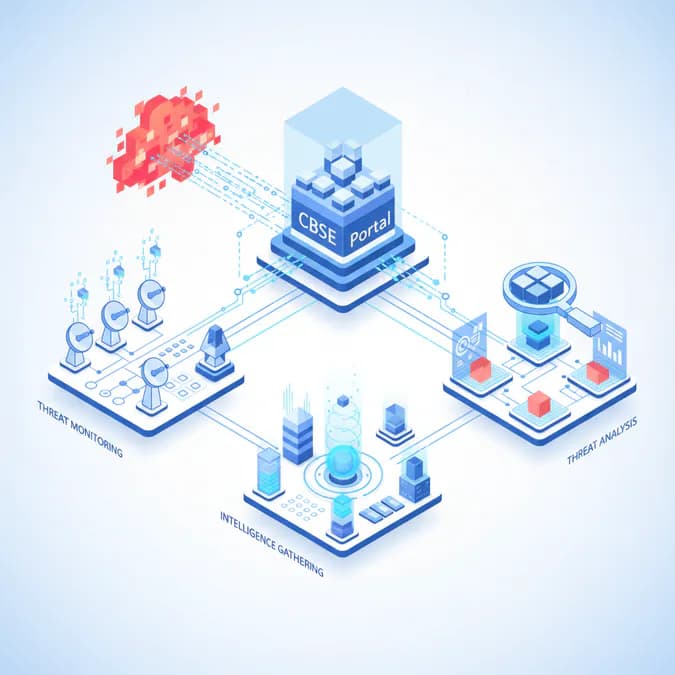
The government-ordered audit represents a comprehensive review of the CBSE exam portal's architecture, security protocols, and operational procedures. The IIT team is tasked with examining multiple critical areas:
- System Architecture and Design: Auditors are reviewing the overall design of the digital evaluation system to identify architectural weaknesses that could lead to data breaches or system failures.
- Authentication and Access Controls: The audit includes a detailed examination of how user access is managed, including login mechanisms, role-based access controls, and permission hierarchies.
- Data Encryption and Protection: Investigators are assessing whether student data, exam responses, and scoring information are adequately encrypted both in transit and at rest.
- Scoring Algorithm Integrity: A critical component involves verifying that the automated scoring algorithms function correctly and cannot be manipulated or bypassed.
- Audit Trails and Logging: The team is examining whether the system maintains comprehensive logs of all activities, which is essential for detecting unauthorized access or modifications.
- Vulnerability Assessment: Security professionals are conducting penetration testing and vulnerability scanning to identify potential entry points for attackers.
Security Implications for Educational Systems
The CBSE portal incident highlights broader cybersecurity challenges facing India's educational infrastructure. Educational institutions increasingly rely on digital systems for critical functions, yet many lack the robust security frameworks necessary to protect sensitive information.
Student data represents a valuable target for cybercriminals. Exam scores, personal information, and authentication credentials stored in educational portals can be exploited for identity theft, fraud, or sold on the dark web. When such systems are compromised, the consequences extend far beyond individual students to affect institutional credibility and national education standards.
The incident also raises questions about the security maturity of government-operated digital platforms. As India accelerates its digital transformation, ensuring that critical systems meet enterprise-grade security standards becomes increasingly important.
Scoring Discrepancies: A Technical or Security Issue?
One of the most concerning aspects of the CBSE portal situation is the reported scoring discrepancies. These inconsistencies could stem from several sources:
- Software Bugs: Programming errors in the evaluation algorithms could cause incorrect score calculations or data processing failures.
- Database Corruption: Issues with data storage or retrieval could result in lost or altered scoring information.
- Unauthorized Modifications: If security controls are inadequate, malicious actors could potentially alter scores or evaluation records.
- System Integration Failures: Problems in how different components of the portal communicate could lead to data inconsistencies.
The audit will need to determine whether discrepancies result from technical failures or represent evidence of security breaches. This distinction is crucial because it determines both the remediation approach and the potential scope of compromised data.
Hack Claims and Threat Landscape
Alongside technical glitches, claims regarding potential hacking attempts have added another layer of concern. While the extent and validity of these claims require verification through the audit process, they underscore the reality that educational portals are attractive targets for cybercriminals and state-sponsored actors.
Educational systems can be targeted for various reasons: to steal personal data, to manipulate grades, to disrupt services, or to gain access to institutional networks as a stepping stone to other targets. The CBSE portal, given its scale and importance, would be a high-value target.
Common attack vectors against educational portals include:
- SQL Injection: Attackers exploit vulnerabilities in database queries to access or modify data.
- Cross-Site Scripting (XSS): Malicious scripts are injected into web pages to steal user credentials or session tokens.
- Phishing and Social Engineering: Attackers target staff members to gain legitimate access credentials.
- Denial of Service (DoS) Attacks: Attackers overwhelm the system with traffic to disrupt service availability.
- Insider Threats: Malicious or negligent employees with system access pose significant risks.
- Weaknesses in Third-Party Integrations: Connected systems may introduce vulnerabilities.
Implications for Students and Institutions
The CBSE portal situation has direct implications for millions of students whose academic records and futures depend on the integrity of the examination system. Scoring errors or security breaches could affect college admissions, scholarship eligibility, and career prospects.
For educational institutions, the incident raises questions about their responsibility to protect student data and maintain system integrity. Schools and colleges relying on the CBSE portal must consider what additional safeguards they can implement at their end.
Parents and students are rightfully concerned about the security of their personal information and the accuracy of academic records. Rebuilding trust in the system will require transparent communication about the audit findings and concrete improvements.
Government Response and Remediation
The government's decision to commission an IIT audit demonstrates recognition of the seriousness of the situation. IIT teams bring technical expertise and credibility to the investigation, which should help identify root causes and recommend solutions.
Expected outcomes from the audit include:
- Detailed findings on the nature and scope of security vulnerabilities
- Recommendations for system architecture improvements
- Guidance on implementing stronger security controls
- Procedures for verifying the accuracy of existing scores
- Protocols for preventing similar incidents in the future
Based on audit findings, the CBSE will likely need to implement significant upgrades to its digital infrastructure. This could include deploying advanced security technologies, implementing zero-trust security models, enhancing encryption protocols, and establishing dedicated cybersecurity teams.
Broader Lessons for Digital Education Infrastructure
The CBSE portal incident offers important lessons for educational institutions and government agencies managing digital systems:
- Security Must Be Built In: Security cannot be an afterthought. Systems must be designed with security as a core requirement from inception.
- Regular Audits Are Essential: Periodic security audits and penetration testing should be standard practice for critical systems.
- Data Protection Requires Expertise: Educational institutions need dedicated cybersecurity professionals, not just IT administrators.
- Transparency Builds Trust: Clear communication about security measures and incident response helps maintain stakeholder confidence.
- Compliance Matters: Systems should comply with relevant data protection regulations and security standards.
- Incident Response Planning: Organizations need documented procedures for detecting, responding to, and recovering from security incidents.
Key Takeaways
As the IIT audit progresses, the CBSE and educational stakeholders await findings that will determine the scope of remediation needed. The incident serves as a critical reminder that digital transformation in education must be accompanied by equally robust security measures.
The credibility of India's examination system depends on ensuring that digital platforms are both reliable and secure. Students, parents, educators, and policymakers all have a stake in ensuring that the CBSE portal and similar systems meet the highest standards of security and integrity.
Moving forward, the focus should be on implementing the audit recommendations comprehensively, establishing ongoing security monitoring, and fostering a culture of security awareness throughout the organization. Only through such comprehensive efforts can confidence in the digital examination system be fully restored.