
The AI Warfare Reality
The next generation of AI warfare cybersecurity has arrived, fundamentally changing how we think about cybersecurity and national defense. Autonomous drones, AI-integrated battlefield systems, and humanoid robots are no longer theoretical concepts—they're operational realities being deployed in active conflict zones. The cybersecurity implications of thes
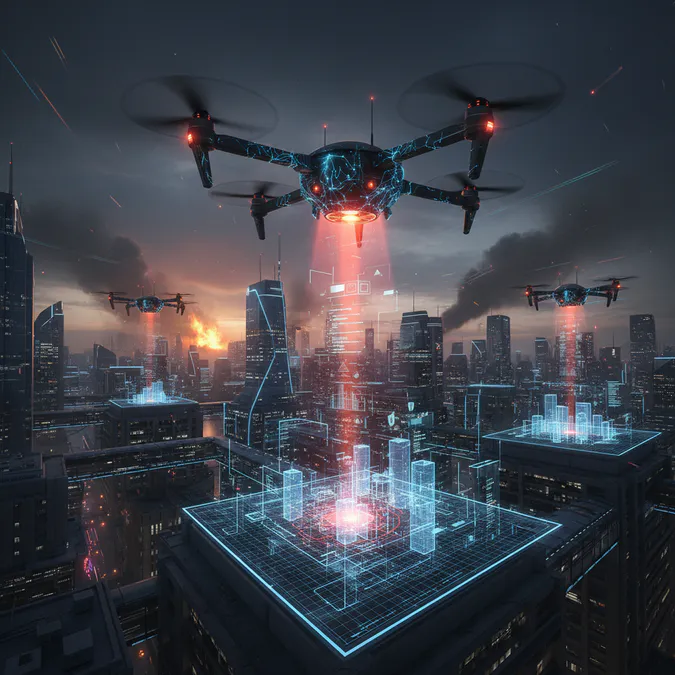
The emergence of AI-enabled autonomous weapons represents a critical inflection point in military technology. Ukraine's deployment of sophisticated AI platforms like Delta, which analyzes up to 12,000 pieces of Russian equipment weekly, demonstrates how artificial intelligence is compressing detection-to-strike timelines and fundamentally altering battlefield dynamics. Meanwhile, the U.S. Army has transformed aviation squads since 2040 to consist primarily of drone pilots, analysts, and cyber warfare experts trained to control multiple unmanned systems simultaneously. This technological shift creates unprecedented cybersecurity challenges that demand immediate attention and strategic response.
The stakes couldn't be higher. Russia's deepening collaboration with China on autonomous weapons development, with approximately 80% of critical technologies in Russian drones supplied by China, underscores how AI warfare capabilities are spreading globally. The U.S. Department of Defense faces critical decisions about managing this new battlefield, and how these decisions are implemented will have profound implications for national survival and global security.
Drone Technology and AI Integration
Modern autonomous drones represent a convergence of computer vision, machine learning, and real-time data processing. Ukrainian quadcopters equipped with AI systems can identify and eliminate specific targets autonomously when communications fail, including precision strikes through windows for targeted operations. This capability fundamentally changes the nature of warfare by removing the requirement for constant human-in-the-loop control.
The technical architecture supporting these systems is remarkably sophisticated. Ukraine's Delta AI platform serves as a central nervous system for battlefield operations, integrating drone footage, sensor data, and intelligence analysis into a unified digital environment. According to Illia Malko, a drone intelligence operator with Khartiia Brigade's strike drone unit Yasni Ochi, "Without systems like this it is practically impossible to wage war today. Live streams from drones feed directly into Delta, allowing operators to add targets to the map almost immediately." This integration creates a detection-to-strike timeline measured in minutes rather than hours, fundamentally altering tactical and strategic calculations.
The computational demands of these systems are substantial. A single HD drone video feed at 25 frames per second consumes approximately 10 Mbps of bandwidth, according to research cited by the Atlantic Council. When multiplied across dozens or hundreds of simultaneous drone operations, the bandwidth requirements become staggering. This creates a critical vulnerability: when adversaries successfully deny communications or degrade network connectivity, autonomous systems must operate with degraded situational awareness or shift to fully autonomous decision-making protocols.
Real-World Autonomous Drone Operations
Ukrainian forces have demonstrated the operational effectiveness of coordinated autonomous drone systems. In May 2026, Ukrainian forces launched coordinated swarms of 800+ autonomous drones in operations in the Kharkiv sector, demonstrating real-time coordination of air and ground systems for suppressing air defenses and striking artillery positions. This scale of autonomous coordination represents a significant leap in military capability and introduces corresponding cybersecurity challenges.
Humanoid Robots and Combat Operations
Beyond quadcopters, the U.S. military is investing heavily in humanoid robots designed for high-risk combat scenarios. Foundation's Phantom MK-1 represents the cutting edge of this technology, with $24 million in combined research contracts with the U.S. Army, Navy, and Air Force. Two units have already been deployed to Ukraine for reconnaissance support, with Marine Corps testing scheduled for breaching operations and combat scenarios.
Eric LeBlanc, an executive at Foundation, emphasized the urgency of this development: "Humanoid soldiers will be part of the U.S.'s next conflict. You can't take decades for these things to develop anymore, because our adversaries aren't going to." This statement reflects the accelerated timeline for autonomous weapons development driven by competitive pressure from Russia and China.
The deployment of humanoid robots introduces new cybersecurity considerations. These systems must operate in contested environments where communications may be jammed or degraded, requiring robust autonomous decision-making capabilities. The integration of computer vision, tactical reasoning, and autonomous movement creates complex attack surfaces that adversaries could potentially exploit. Unlike traditional military equipment, humanoid robots with advanced AI systems represent a new category of cyber-physical systems that require specialized security approaches.
Cybersecurity Vulnerabilities in Autonomous Systems
The rapid deployment of AI-enabled autonomous weapons has created significant cybersecurity vulnerabilities. These systems operate across multiple attack vectors: network communications, sensor inputs, autonomous decision-making algorithms, and coordination protocols between multiple unmanned systems.
Sensor Input Manipulation and Adversarial Attacks
One critical vulnerability involves adversarial manipulation of sensor inputs. AI systems trained on specific datasets may be vulnerable to carefully crafted inputs designed to cause misidentification or malfunction. An adversary could potentially craft visual inputs that fool computer vision systems or inject false data into sensor streams to cause autonomous systems to behave unpredictably. This represents a fundamental challenge in AI security: ensuring that machine learning models remain robust against adversarial inputs in contested environments.
Drone Swarm Coordination Vulnerabilities
Another major concern involves the coordination protocols enabling drone swarms. The coordination of 800+ autonomous drones relies on communication protocols that could potentially be intercepted, jammed, or spoofed by adversaries. If an attacker could inject false coordination commands into a drone swarm, the entire formation could be compromised. The distributed nature of swarm operations means that a single compromised drone could potentially compromise the entire swarm's effectiveness or redirect it toward unintended targets.
Digital Command System Vulnerabilities
The reliance on digital command systems processing thousands of data points in real time creates additional vulnerabilities. These systems must maintain operational effectiveness when adversaries actively deny communications or degrade network connectivity. The shift toward autonomous decision-making when communications fail means that compromised autonomous systems could continue operating under adversary control even after communications are severed. This creates a scenario where an adversary could compromise a system during normal operations and then activate malicious behavior when communications are degraded and the system is forced to operate autonomously.
National Security Implications and Strategic Response
The U.S. Department of Defense recognizes the strategic importance of AI warfare capabilities. The Pentagon's AI strategy emphasizes competing in the age of autonomous systems while maintaining human oversight of lethal decision-making. However, the practical reality of modern warfare—where detection-to-strike timelines are measured in minutes—creates pressure to delegate more autonomous authority to AI systems.
The U.S. military's partnership with tech companies and organizations like the Defense Innovation Unit reflects recognition that private sector innovation is essential for maintaining technological advantage. However, this creates additional cybersecurity challenges, as military systems increasingly depend on commercial technology and supply chains that may be vulnerable to compromise. The integration of commercial AI systems into military operations requires careful vetting and security hardening to prevent adversaries from exploiting vulnerabilities in commercial technology.
Geopolitical Competition and Supply Chain Risks
Russia's collaboration with China on autonomous weapons development adds urgency to American strategic planning. The fact that approximately 80% of critical technologies in Russian drones are supplied by China suggests a coordinated effort to develop autonomous weapons capabilities outside Western technological ecosystems. This geopolitical dimension means that cybersecurity vulnerabilities in AI warfare systems have direct implications for great power competition. The U.S. must ensure that its autonomous weapons systems are not dependent on supply chains that could be compromised by adversaries.
International Perspectives and Allied Coordination
NATO allies are beginning to recognize the strategic importance of AI-integrated battlefield systems. At least one NATO country is investigating adoption of Ukraine's Delta platform, recognizing that fully digitized, AI-integrated battlefield awareness provides significant operational advantages. Illia Malko emphasized this point: "Every military should have a system like Delta. Ideally allied forces would operate within the same software environment."
This perspective highlights a critical cybersecurity challenge: standardizing AI battlefield systems across allied nations while maintaining security and preventing adversary access. If NATO forces operate within the same software environment, a vulnerability in that environment could potentially compromise multiple allied militaries simultaneously. The standardization of AI systems across allied nations requires careful coordination to ensure that security measures are consistent and that vulnerabilities in one nation's implementation don't compromise the entire alliance.
Defense Countermeasures and Cybersecurity Solutions
Defending against AI warfare requires a multi-layered approach addressing technical, operational, and strategic dimensions.
Technical Defense Measures
At the technical level, military systems must incorporate robust authentication protocols, encryption, and anomaly detection systems capable of identifying compromised autonomous systems or injected false data. These systems must be designed specifically for the unique challenges of autonomous weapons, including:
- Cryptographic authentication protocols that function reliably in degraded communications environments
- Anomaly detection systems trained to identify both network-based attacks and adversarial inputs to AI systems
- Encryption schemes that protect both data in transit and data at rest on autonomous systems
- Secure boot and firmware verification mechanisms to prevent unauthorized modification of autonomous system software
Operational Defense Strategies
Operational defenses must include redundancy and graceful degradation. If primary communications are jammed or degraded, autonomous systems must continue operating effectively with reduced situational awareness. This requires careful design of autonomous decision-making algorithms that maintain effectiveness even when operating with incomplete or potentially compromised information. Operational strategies should include:
- Redundant communication channels using different frequencies and protocols
- Autonomous decision-making algorithms designed to operate safely with degraded information
- Regular testing and validation of autonomous systems in contested communications environments
- Human oversight mechanisms that can rapidly intervene if autonomous systems behave unexpectedly
Strategic Defense Capabilities
Strategic defenses involve developing countermeasures against adversary autonomous systems. This includes electronic warfare capabilities to jam or spoof drone communications, kinetic defenses to destroy autonomous systems, and cyber operations to compromise adversary command and control systems. The U.S. Army's emphasis on training drone pilots, analysts, and cyber warfare experts reflects recognition that defending against AI warfare requires integrated capabilities across multiple domains.
Regulatory and Ethical Frameworks
Regulatory frameworks and civilian protection represent another critical dimension. The rapid deployment of autonomous weapons has outpaced development of international norms and regulations governing their use. Organizations like the Brennan Center for Justice are advocating for regulatory frameworks that maintain human control over lethal decision-making while acknowledging the operational realities of modern warfare. These frameworks must address:
- Requirements for human oversight of lethal decision-making
- Accountability mechanisms for autonomous system failures or misuse
- International norms governing autonomous weapons development and deployment
- Civilian protection measures in conflicts involving autonomous systems
Future Outlook and Strategic Recommendations
The trajectory of AI warfare development suggests that autonomous systems will become increasingly prevalent in military operations. The competitive pressure from Russia and China means the U.S. cannot afford to delay development and deployment of these capabilities. However, this acceleration creates cybersecurity risks that must be carefully managed.
Key Strategic Recommendations
Maintaining cybersecurity advantage in AI warfare requires a comprehensive approach:
- Invest heavily in AI security research to identify and remediate vulnerabilities before they can be exploited in operational systems
- Develop robust authentication and encryption protocols specifically designed for autonomous military systems operating in contested environments
- Establish international norms and regulations governing autonomous weapons development and deployment to prevent uncontrolled proliferation
- Maintain human oversight of lethal decision-making while acknowledging operational constraints and the need for autonomous effectiveness
- Build redundancy and graceful degradation into autonomous systems to maintain effectiveness when adversaries attempt to compromise them
- Coordinate with allied nations on standardized AI battlefield systems while protecting sensitive capabilities and maintaining security
- Develop specialized cyber warfare capabilities to defend against and counter adversary autonomous systems
The Path Forward
The U.S. military's transformation toward drone pilots, analysts, and cyber warfare experts reflects recognition that future conflicts will be decided by technological advantage in autonomous systems and the cybersecurity measures protecting them. Success in this domain requires sustained investment, rapid innovation, and careful management of the cybersecurity risks inherent in delegating military decision-making to autonomous AI systems.
The emergence of AI warfare represents a fundamental shift in military operations and cybersecurity strategy. How the U.S. manages this transition—balancing rapid innovation with cybersecurity rigor, maintaining human oversight while enabling autonomous effectiveness, and coordinating with allies while protecting sensitive capabilities—will determine military advantage in future conflicts and have profound implications for national security and global stability.
The next generation of warfare is here. The cybersecurity measures we implement today will determine whether the U.S. maintains technological advantage or falls behind in the race to develop and defend AI-enabled autonomous weapons systems. This is not a challenge that can be delayed or addressed incrementally—it requires immediate, sustained, and comprehensive action across technical, operational, strategic, and diplomatic dimensions.
Key Takeaways
- AI warfare cybersecurity is critical for national defense in the age of autonomous systems.
- Understanding vulnerabilities in AI systems is essential for effective military operations.
- Collaboration between military and tech sectors is necessary to maintain a technological edge.
- International norms and regulations must evolve to address the challenges posed by autonomous weapons.
- Robust cybersecurity measures are essential to protect against adversarial threats.
Frequently Asked Questions
What is AI warfare cybersecurity?
AI warfare cybersecurity refers to the protection of military systems that utilize artificial intelligence and autonomous technologies from cyber threats and vulnerabilities.
Why is cybersecurity important in AI warfare?
Cybersecurity is crucial in AI warfare to ensure the integrity and effectiveness of autonomous systems, preventing adversaries from exploiting vulnerabilities that could compromise military operations.
How can military organizations improve their AI cybersecurity?
Military organizations can enhance AI cybersecurity by investing in research, developing robust protocols, and establishing international regulations to govern the use of autonomous weapons.