
The Rise of Human-Robot Collaboration

The convergence of artificial intelligence (AI) and robotics is transforming industries, particularly in manufacturing. A key aspect of this transformation is the increasing collaboration between humans and robots, often facilitated by digital twins. While this collaboration promises enhanced efficiency and productivity, it also introduces new AI security challenges that must be addressed proactively.
Digital twins, virtual replicas of physical assets or systems, enable real-time monitoring, simulation, and optimization. In the context of human-robot collaboration, digital twins provide a safe and controlled environment for testing and refining collaborative workflows before deployment in the physical world. However, the data-rich nature of digital twins and the interconnectedness of these systems make them attractive targets for cyberattacks. Securing these systems is paramount to ensuring the integrity and reliability of manufacturing processes.
This article explores the role of digital twins in adaptive human-robot collaboration, focusing on the AI security implications and the measures needed to mitigate potential risks.
Understanding Human-Robot Collaboration
Human-robot collaboration (HRC) is rapidly becoming a cornerstone of modern manufacturing. Unlike traditional automation, where robots operate in isolation, HRC involves robots working alongside humans, augmenting their capabilities and improving overall productivity. This collaborative approach is particularly valuable in tasks that require a combination of precision, dexterity, and adap
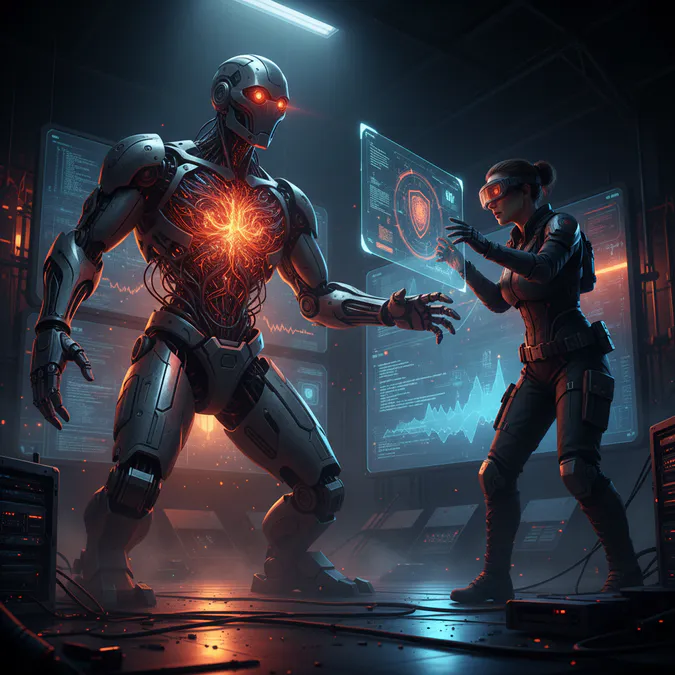
In industries like wind turbine manufacturing, HRC can streamline complex processes such as blade assembly, welding, and quality control. Robots can handle repetitive or physically demanding tasks, while humans provide oversight, problem-solving skills, and fine motor control. The integration of digital twins further enhances this collaboration by providing a virtual representation of the manufacturing environment, allowing for real-time monitoring and optimization.
Digital Twins: Enabling Adaptive Collaboration
Digital twins are virtual models that mirror physical assets, processes, or systems. They leverage data from sensors, simulations, and historical records to provide a comprehensive and up-to-date representation of their physical counterparts. In the context of HRC, digital twins enable several key capabilities:
- Real-time Monitoring: Digital twins provide real-time insights into the performance of robots and human workers, allowing for proactive identification and resolution of potential issues.
- Simulation and Optimization: Digital twins can be used to simulate different scenarios and optimize collaborative workflows before implementation in the physical world. This reduces the risk of errors and improves overall efficiency.
- Predictive Maintenance: By analyzing data from sensors and simulations, digital twins can predict when maintenance is required, minimizing downtime and extending the lifespan of equipment.
- Training and Education: Digital twins provide a safe and realistic environment for training human workers on how to collaborate with robots effectively.
AI Security Challenges in Human-Robot Collaboration with Digital Twins
While digital twins offer numerous benefits, they also introduce new AI security challenges. The interconnectedness of these systems and the sensitive data they contain make them vulnerable to cyberattacks. Some of the key AI security concerns include:
- Data Breaches: Digital twins collect and store vast amounts of data, including sensitive information about manufacturing processes, equipment performance, and worker activities. A data breach could expose this information to unauthorized parties, leading to intellectual property theft, competitive disadvantage, or even physical harm.
- Malware Infections: Robots and other connected devices are susceptible to malware infections, which can disrupt manufacturing processes, compromise data integrity, or even cause physical damage. Digital twins can be used to detect and mitigate malware infections, but they can also be targeted by attackers.
- Denial-of-Service (DoS) Attacks: DoS attacks can disrupt the availability of digital twins, preventing human workers from accessing critical information or controlling robots. This can lead to production delays, quality issues, or even safety hazards.
- Manipulation of Digital Twin Data: Attackers could manipulate the data within a digital twin to alter the behavior of robots or mislead human workers. This could result in defective products, equipment damage, or even injuries.
- AI Model Poisoning: If the AI models used within the digital twin are compromised through poisoning attacks, the entire system's decision-making capabilities can be undermined, leading to incorrect predictions and flawed operational strategies.
Essential AI Security Measures
To mitigate the AI security risks associated with human-robot collaboration and digital twins, organizations must implement a comprehensive set of security measures. These measures should address all aspects of the system, from the physical security of robots to the cybersecurity of digital twins.
- Robust Authentication and Access Control: Implement strong authentication mechanisms, such as multi-factor authentication, to prevent unauthorized access to digital twins and connected devices. Use role-based access control to restrict access to sensitive data and functions based on user roles.
- Network Segmentation: Segment the network to isolate critical systems, such as robots and digital twins, from less secure devices. This can limit the impact of a security breach and prevent attackers from gaining access to sensitive data.
- Intrusion Detection and Prevention Systems: Deploy intrusion detection and prevention systems to monitor network traffic and identify suspicious activity. These systems can detect and block attacks before they cause damage.
- Data Encryption: Encrypt sensitive data both in transit and at rest to protect it from unauthorized access. Use strong encryption algorithms and manage encryption keys securely.
- Regular Security Audits and Penetration Testing: Conduct regular security audits and penetration testing to identify vulnerabilities and weaknesses in the system. Address any identified issues promptly.
- AI Model Security: Implement security measures to protect AI models from poisoning attacks, including input validation, anomaly detection, and model monitoring.
- Security Awareness Training: Provide security awareness training to all employees, including human workers and IT staff. This training should cover topics such as phishing attacks, malware prevention, and data security best practices.
The Future of Secure Human-Robot Collaboration
The future of manufacturing lies in the seamless integration of humans and robots, powered by digital twins. However, realizing this vision requires a proactive approach to AI security. By implementing robust security measures and staying ahead of emerging threats, organizations can ensure that human-robot collaboration remains safe, reliable, and productive.
As AI and robotics technologies continue to evolve, so too will the AI security challenges. Organizations must invest in ongoing research and development to stay ahead of these challenges and develop innovative solutions for securing human-robot collaboration systems. This includes exploring new technologies such as blockchain, federated learning, and homomorphic encryption, which offer promising approaches to enhancing AI security and privacy.
Key Takeaways
- Digital twins are revolutionizing human-robot collaboration in manufacturing, enabling real-time monitoring, simulation, and optimization.
- However, digital twins also introduce new AI security challenges, including data breaches, malware infections, and denial-of-service attacks.
- Organizations must implement a comprehensive set of security measures to mitigate these risks, including robust authentication, network segmentation, data encryption, and regular security audits.
- The future of secure human-robot collaboration requires ongoing research and development to stay ahead of emerging threats and develop innovative security solutions.
Frequently Asked Questions (FAQ)
What are digital twins in manufacturing?
Digital twins are virtual replicas of physical assets or systems that enable real-time monitoring and optimization, enhancing collaboration between humans and robots.
How can AI security be improved in human-robot collaboration?
AI security can be improved through robust authentication, network segmentation, data encryption, and regular security audits to protect against cyber threats.
What are the main AI security challenges in using digital twins?
Main AI security challenges include data breaches, malware infections, denial-of-service attacks, and manipulation of digital twin data.
The Bottom Line
Securing human-robot collaboration systems is essential for realizing the full potential of Industry 4.0. By prioritizing AI security and implementing robust security measures, organizations can ensure that these systems remain safe, reliable, and productive, driving innovation and economic growth.
Table of Contents
- The Rise of Human-Robot Collaboration
- Understanding Human-Robot Collaboration
- Digital Twins: Enabling Adaptive Collaboration
- AI Security Challenges in Human-Robot Collaboration with Digital Twins
- Essential AI Security Measures
- The Future of Secure Human-Robot Collaboration
- Key Takeaways
- Frequently Asked Questions (FAQ)
- The Bottom Line